How Do We Read a Sequence of Nucleotides
If Dna is the building block of life, and so the nucleotides are the building blocks of Dna. But what is a nucleotide exactly? Nucleotides are a grade of organic compounds that make up nucleic acrid, the substance that defines hereditary traits of all living organisms. Nucleotides are an essential part of Deoxyribonucleic acid, RNA, and cell function, and they tin can serve many purposes depending on their structure and chemical compounds. Nosotros'll go over the nucleotide definition, the unlike types of nucleotides out in that location, what makes each type of nucleotide unique, and why nucleotides are involved in nearly all cellular activities. Before we requite you the nucleotide definition, here are some helpful definitions of words we'll utilize when discussing nucleotides: At present then, what is a nucleotide? Let'due south have a expect! Nucleotides are organic molecules that serve every bit the basic structural (monomer) units for Deoxyribonucleic acid and RNA, which, as we know, are the building blocks responsible for all life on Globe. Each nucleotide contains a nitrogenous base, a five-carbon sugar, and at least 1 phosphate group. When bonded together, nucleotides create nucleic acid, that is, the "strings" of Deoxyribonucleic acid. Nucleotides can also stand independently and collaborate with cells in other ways. We know that nucleotides are the building blocks of Dna and RNA, but they too do a lot of other things. In lodge to understand why and how nucleotides perform their extremely important jobs, permit'due south first go over what they're made out of and how they become nucleic acid. The type of nucleotide is defined by its chemical base. There are 5 chemical bases: The base of operations and the amount of phosphate balance ascertain how the chemical compound is named. For example, an Adenine nucleotide with one phosphate grouping is called adenosine monophosphate. "Adenosine" refers to "Adenine," or the chemical base of the nucleotide, and "monophosphate" refers to the fact that it has 1 phosphate group (call up that "mono" means "one"!). These bases are each defined past a letter and are either pyrimidines or purines. Adenine (A): Adenine is a purine with the chemical compound C5H5Nfive. An Adenine-based nucleotide is called adenosine. Adenine is formed past two hydrogen bonds, which help stabilize nucleic acid structures. ATP (adenosine triphosphate) is also an of import grade of energy, plant in most cellular functions. Cytosine (C): Cytosine is a pyrimidine with the chemical compound C4H5N3O. A cytosine-based nucleotide is chosen a cytosine. Cytosine is a heterocyclic aromatic ring with two substituents fastened. Cytosine pairs with guanine to course nucleic acid, just as a free nucleotide tin work as a co-enzyme that helps convert ADP (adenosine diphosphate) to ATP. Guanine (One thousand): Guanine is a purine with the chemic compound C5H5NfiveO. A guanine-based nucleotide is chosen a guanosine. Guanine is a fused band with conjugated double bonds. Guanine bonds with cytosine via 3 hydrogen bonds to course the nucleic acid in DNA. Thymine (T): Thymine is a pyrimidine with the chemical compound C5Hhalf dozenN2O2. A thymine-based nucleotide is chosen a thymidine. Thymine is a fused band with conjugated bonds. Thymine bonds with adenine to form nucleic acid; this helps stabilize the nucleic acid structures. Uracil (U): Uracil is a weak acid with the chemical chemical compound CivH4NiiOii. A uracil-based nucleotide is called uridine. Uracil is a demethylated form of thymine, and replaces thymine in RNA. Demethylation is a chemical process in the removal of CHiii (or a methyl group) from a molecule. The bases can combine with phosphates and sugars depending on how they're formed, and serve every bit free nucleotides, in which they affect cell function (nosotros'll explore this concept more afterwards). Or these nucleotides can bond with one another based on their molecular structures to form nucleic acid. Each nucleotide is a molecule, and so while the bases are extremely important for how the nucleotide is classified and for its eventual function, they cannot grade without the other elements that make up the molecule. 1 of these elements is unproblematic, five-carbohydrate sugars. A nucleotide tin comprise one of 2 sugars: Merely because the nucleotide base has one of the two types of sugars, that doesn't hateful that it will necessarily bond with other nucleotides to form nucleic acid. Phosphates are a chemical derivative of phosphoric acid. You might've heard of phosphate when discussing sure household items—inorganic phosphates are used in things such as fertilizer and laundry detergent. Naturally occurring phosphates, however, are an integral part of the germination of nucleotides. Each nucleotide is made upwards of one, two, or 3 phosphate groups. Complimentary nucleotides can be fabricated upwardly of a sugar, a base, and one or two phosphate groups; therefore, they are known equally either monophosphates (if it has i phosphate group) or diphosphates (if it has two groups). The nucleotides that bond together to brand the nucleic acrid in DNA and RNA are triphosphates (meaning they take three phosphate groups). Nucleotides are coded past the sugar, the base of operations, and the number of phosphate groups. For example, a nucleotide called dATP is deoxyadenosine triphosphate, while GMP is guanosine monophosphate. If the proper name does not have a "d" in information technology, and then this indicates that it is made from a ribose sugar instead of a deoxyribose sugar. We've already gone over the nucleotide definition. Simply what exactly do nucleotides practice? In other words, what is their purpose? We know that RNA and DNA are fabricated up of "strings" of nucleic acid, and carry out genetic coding. RNA and Dna are changing all the fourth dimension, and the cells are constantly growing and dying in them, too every bit in all the other parts of our bodies. Nucleotides are a major part of this procedure in a few key ways. Showtime, they class that bases for nucleic acid. Second, working exterior of nucleic acid, they help trigger and even participate in cell role. In order to class nucleic acid, 2 triphosphate nucleotides must bond via hydrogen atoms in a process known as "base of operations pairing." Each base of operations is formed by complementary nucleotides, one purine and one pyrimidine: In terms of our nucleic bases, here are the triphosphates that make upward DNA: The nucleotides that make up RNA are as follows: For example, dCTP and dGTP bonded together would form a nucleic acid. An adenosine diphosphate molecule Di and mono phosphate nucleotides cannot bail to become nucleic acid. However, these nucleotides however have important cellular functions. Nucleotides can deed equally co-enzymes. An enzyme is a substance that's produced by living organisms and that acts as a catalyst to bring almost a specific biochemical reaction. They can help speed along chemical processes when bound with an enzyme. The part of the co-enzyme depends on several factors, including what the nucleotide bonds with. ATP in item serves as a co-enzyme frequently and is considered the main energy currency in living cells. Since ATP is so stable, it stays in a cell until it's fix to exist used and and so releases free energy to trigger a chemic reaction. Nucleotides also play an important function in cellular metabolism. This is a process that takes place in cells, in which the cells are degraded due to chemical reactions in the nucleotide. This procedure is especially of import in RNA and DNA, as it's happening within our cells at all times, meaning that it's extremely important it goes right. If not, information technology can result in a variety of diseases. This reaction is triggered in the nucleotide, and the cellular deposition begins. When this occurs in RNA and DNA, sometimes parts of the nucleotide tin can exist salvaged to create new nucleotides. Nucleotides are just one part of the intricate world of cellular biology. They play a fundamental role in the life and structure of Deoxyribonucleic acid and RNA, and their function is incredibly important in the buildup and breakup of cells. Our cells are carefully working together every day, and understanding what a nucleotide does can assistance us make sense of the basics of our cells and how they piece of work. Studying for the AP Biological science test? So check out out our expert AP Biology study notes as well every bit this complete breakdown of the examination. Learning well-nigh biology? Nosotros can help respond all your biggest biology questions. Read about enzymes and what they exercise in this mail and don't forget to take a await at our detailed caption of cell theory and our discussion of the endoplasmic reticulum.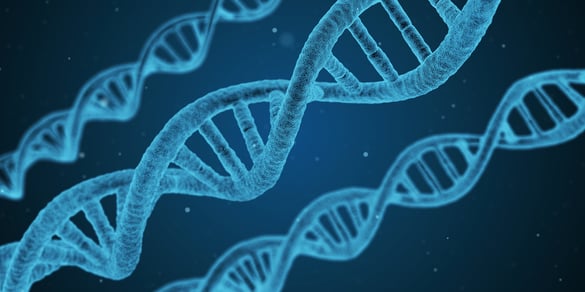
Nucleotide Central Terms
What Is a Nucleotide?
What Is the Nucleotide Structure?
Nucleotide Bases
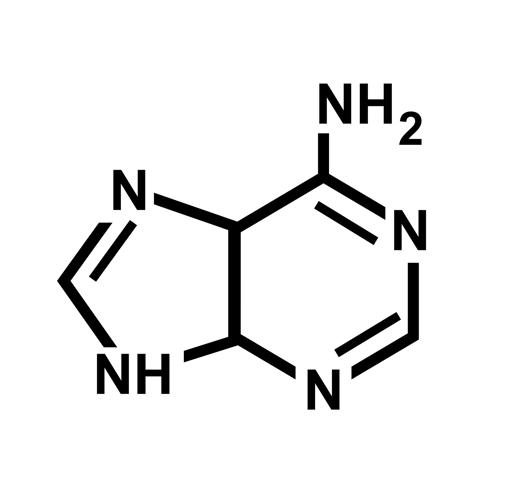 An Adenine base
Pentose Monosaccharides (Simple Sugars)
Phosphate Groups
What Do Nucleotides Do?
DNA and RNA
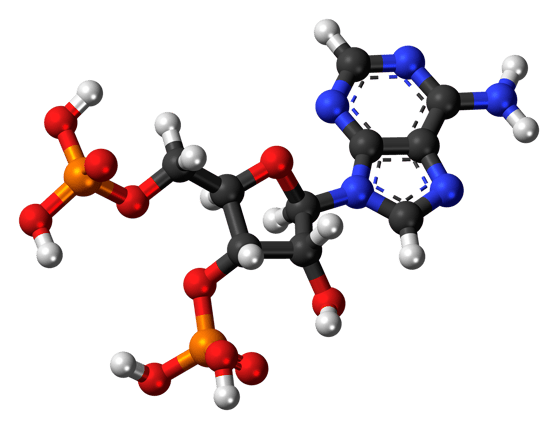
Free Nucleotides
Determination: What Is a Nucleotide? How Do They Work?
What's Next?
Source: https://blog.prepscholar.com/nucleotide-definition
0 Response to "How Do We Read a Sequence of Nucleotides"
Post a Comment